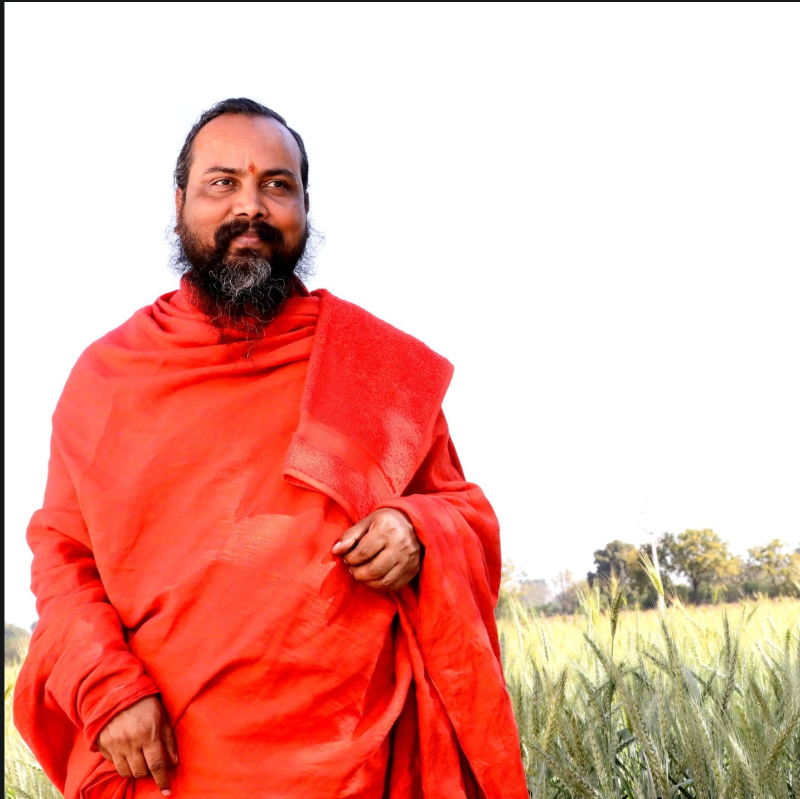
New Delhi: Swami Sandipendra Giri Ji Maharaj has emerged in recent years as a prominent figure in India's contemporary spiritual and religious discourse, appearing in reports and features connected with Hindu religious traditions, Maa Baglamukhi worship, spiritual journeys and public religious events.
His public profile is closely associated with the title Shri Shri 1008 Mahamandaleshwar and with the Panchayati Akhara Shri Niranjani, descriptions that have appeared in published profiles concerning his work. A Lokmat Times feature, for instance, identifies him as "Anant Shri Vibhushit Shri Shri 1008 Mahamandaleshwar Swami Sandipendra Giri Ji Maharaj" and links his name with a reported spiritual journey involving the 12 Jyotirlingas.
Yet, as with many religious figures whose public biographies are built largely through spiritual institutions, devotional publications and feature articles, the available material needs to be read carefully. There is substantial reporting about his activities and religious associations, but not every claim made about his spiritual authority or the powers attributed to Maa Baglamukhi can be independently established as fact.
A Public Identity Built Around Spiritual Traditions
Much of the published material about Swami Sandipendra Giri Ji centres on Hindu spiritual practices, temple traditions and the role of the guru within religious life.
A significant part of his public profile is specifically connected with Maa Baglamukhi. The Bagalamukhi Temple at Nalkheda is a documented religious site in Agar Malwa district of Madhya Pradesh, dedicated to Bagalamukhi, one of the ten Mahavidyas in Hindu tradition. Reports describe him as a spiritual leader closely associated with the temple and quote his interpretation of its religious significance.
Recent reports, including a May 2026 feature on the foundation ceremony for the reconstruction of the Shri Ram–Janaki Math in Sitamarhi, listed Swami Sandipendra Ji Maharaj among the notable spiritual figures present, providing evidence of his active participation in wider cultural networks.